How to Increase Average Spend in Your Cafe
Practical ways to lift average transaction value in a cafe. The arithmetic, why the ask matters more than the menu, when not to upsell, bundles that work, and four things that quietly fail.
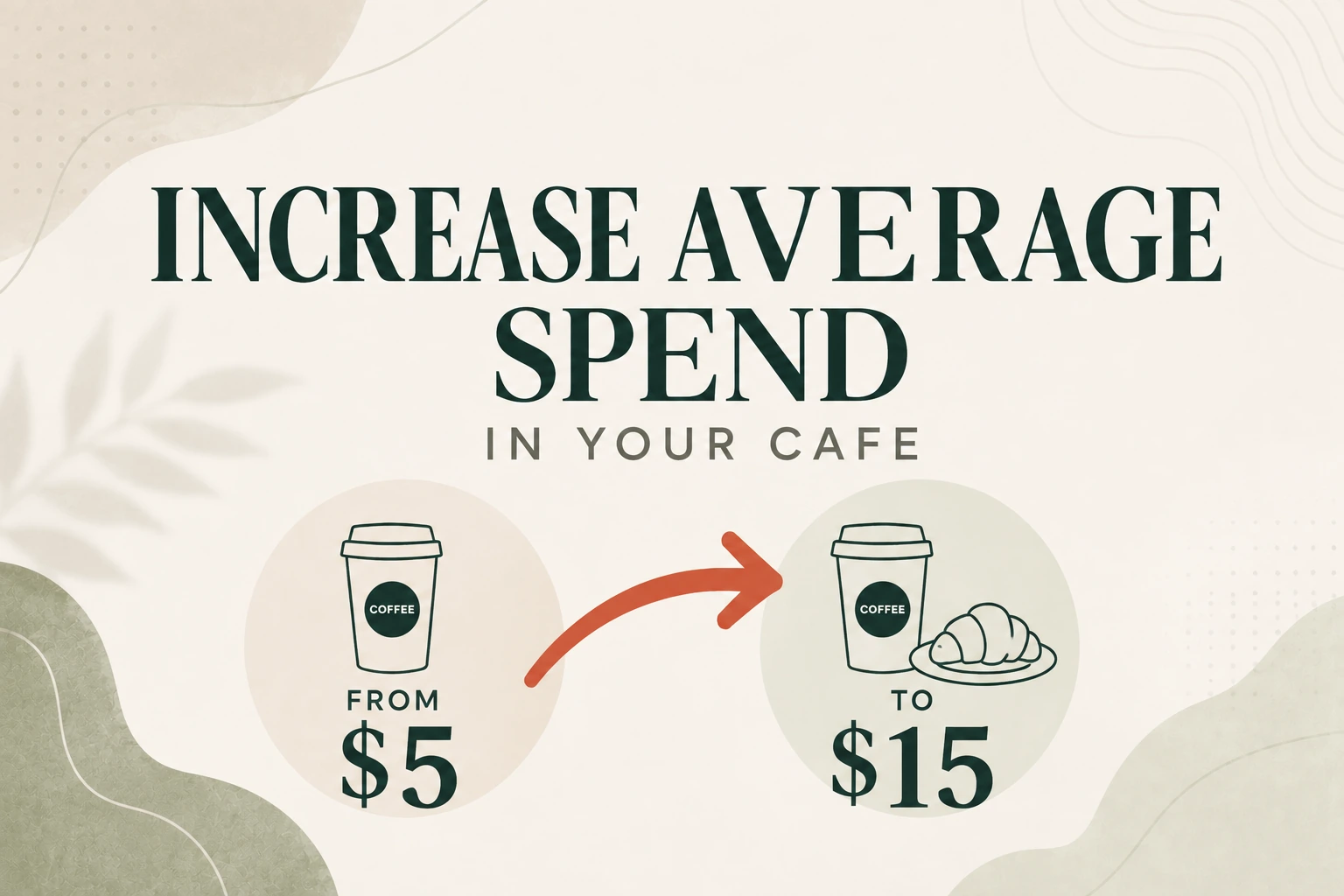
Ask a café owner how they plan to grow and you will usually hear something about foot traffic, or Instagram, or a sandwich board. Almost nobody says "get the people already ordering to spend a bit more", which is odd, because it is by far the cheapest revenue in the building. No advertising, no new customers, no discount.
We are the team behind Back Again, a loyalty and marketing platform for independent cafés. This post is the practical version: what actually shifts average spend, in rough order of return, and what quietly does not.
The arithmetic first
Do this with your own numbers before you read on, because it changes how much effort the rest deserves.
Say you serve 200 customers a day and your average transaction is $6.50. That is $1,300 a day.
Now add 50c to the average. Not to every order, just to the average. That is $100 a day, roughly $3,000 a month, or $36,000 a year.
Monthly revenue · 200 customers a day
Fifty cents is one in ten customers adding a $5 slice. It is not a transformation of your menu or your staff. It is one more yes in every ten orders.
Compare that to getting 15 new customers a day through the door, which is what $100 a day of extra revenue would otherwise require. One of those is free and the other costs you advertising and time.
The ask is the lever. Everything else is smaller
Almost all of the gap between a café doing $6.50 and one doing $8.50 sits in whether staff ask, and how.
"Anything else?" gets a no. It is a closing question. It signals the transaction is finished and invites the customer to confirm it.
A specific suggestion gets a yes far more often. Compare:
"Anything to eat with that?"
"The banana bread just came out of the oven, want a slice warmed up?"
Same offer, wildly different hit rate. The second one works because it names one thing, gives a reason to want it now, and is easy to say yes to. The first asks the customer to do the work of browsing your cabinet from memory.
Pick one item per shift and make it the thing you mention. Not a script for the whole menu, one item. Whatever needs to move, whatever just came out, whatever has the best margin. Tell your team at the start of the shift what today's item is. That single habit does more than any menu redesign.
Do not do it during the morning rush
This is the part most advice gets wrong.
At peak, your constraint is not spend per customer, it is throughput. If a suggestion adds eight seconds to an order and you are pushing 40 orders through an hour, that is over five minutes of extra queue. On a Saturday morning some of those people leave, and you have traded a few slices for lost coffees.
Upsell in the shoulders. Mid-morning, early afternoon, the back half of the day. Those are the hours where you have time to have a conversation, and where you needed the revenue anyway. We wrote about filling those windows in how to fill the dead hours.
At peak, do the silent version instead: put one impulse item at the till, at eye height, already portioned, with a price on it. No conversation required.
Put the suggestion on their phone, not just at the till
The problem with counter upselling is that it only reaches people who already decided to come in. It lifts the spend of a visit that was happening anyway. Useful, but it cannot create the visit.
A timed offer does both. It appears on the loyalty card of every customer who has ever tapped your sign, during the window you choose, with a countdown on it. So the 3pm croissant deal reaches the person deciding whether to bother walking down at 2:45, and it lifts the spend of everyone who was coming regardless.
Here is what one looks like on a customer's phone:
As a thank you for being a regular
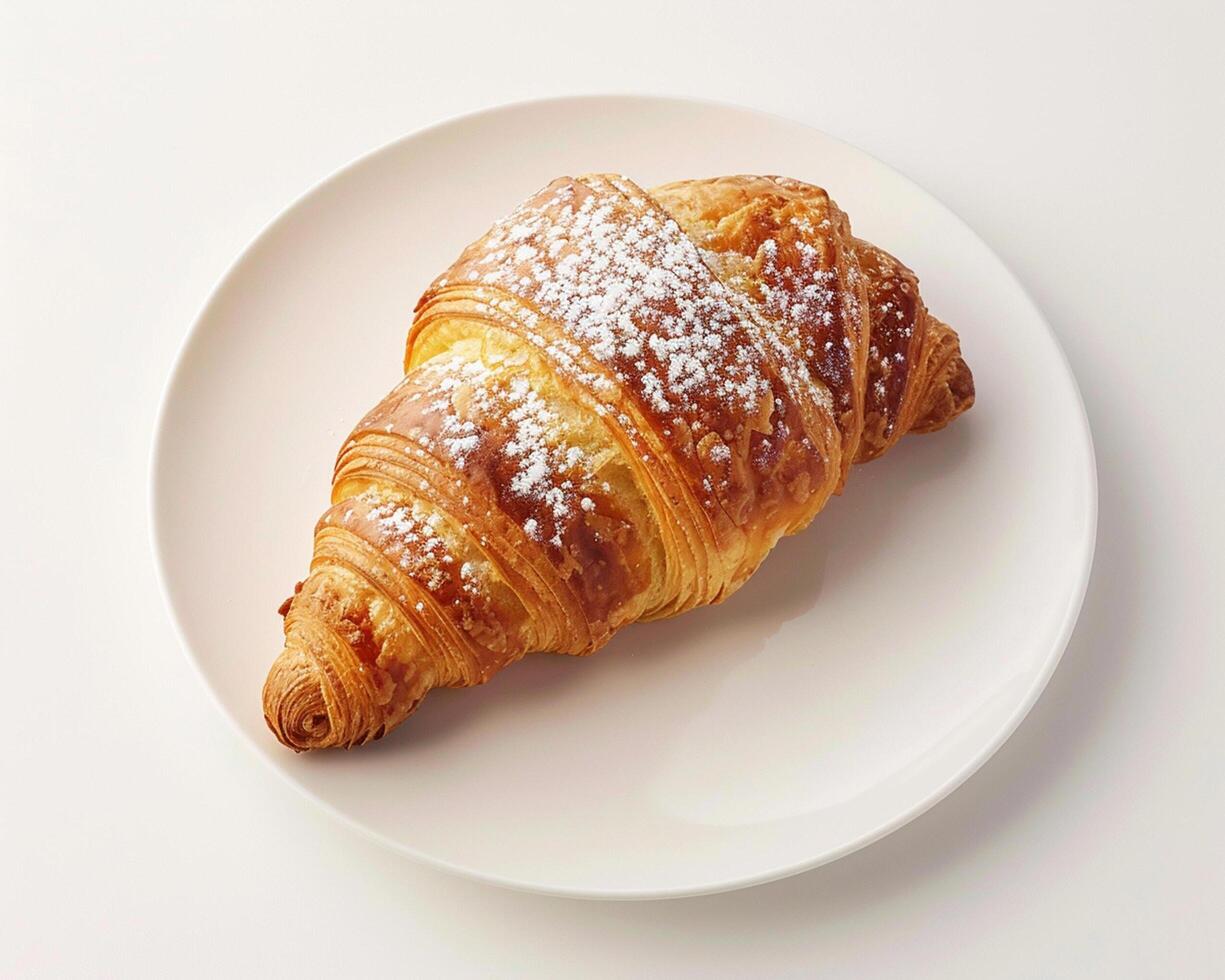 Limited time offer
$4 Croissants
Standard price $7
Offer ends in 42:18
Three things are doing work in that card, and all three are worth copying whatever platform you use:
The standard price is visible. "$4 Croissants" alone is a number. "$4, standard price $7" is a saving, and the customer does not have to know your menu to see it.
There is a deadline on screen. A countdown converts "I might grab one this week" into "I'll go now". This is the same mechanism as the three-day expiry on a win-back email, and it is the difference between an offer that is noticed and one that is acted on.
It is one item, not a category. "Half price pastries" makes the customer choose. "$4 croissants" is a decision already made.
The margin maths is better than it looks. A croissant costing you around $1.20 sold at $4 instead of $7 is still roughly $2.80 of gross margin on an item that was heading for the bin at 4pm. And most people buy a coffee with it, so the actual transaction is closer to $9.50 than $4.
Set the window to your quietest hours and it does two jobs at once: fills the dead time and lifts the average. We go deeper on picking those windows in how to fill the dead hours.
Bundles work because they remove arithmetic
A coffee at $5.50 and a toastie at $9 is two decisions and a sum. "Coffee and a toastie, $13" is one decision.
That is the entire mechanism. People do not buy bundles because they are cheaper, they buy them because they do not have to evaluate. Which means:
- Name it and price it as one thing. Put it on the board, not on a chalkboard aside.
- Keep it to two items. Three becomes a decision again.
- Do not discount below what they would have spent anyway. If your bundle turns a $14.50 order into $13, you have paid $1.50 to change nothing. Bundle things people would not otherwise pair.
The bundles that work best pair your highest-margin item with your most-ordered one, at a price that is obviously fair rather than obviously cheap.
Extras are the quiet money
Small additions, near-zero cost, almost never asked for:
- Extra shot. Costs you around 15c in beans and sells for 50c to $1.
- Syrup or flavour. Similar maths.
- A pastry warmed. Free to you, and warming it is often what converts the sale.
- Beans by the bag. Low volume in most cafés but strong margin, and only ever bought by people you have already earned.
None of these need a campaign. They need to exist on the board and be mentioned once.
Make your loyalty reward drive a purchase
Worth thinking about if you run a stamp card, because most cafés get this backwards.
"Free coffee after 8 stamps" gives away your highest-frequency item and brings in no other spend. The customer collects the free coffee and leaves.
"Free slice with any coffee after 8 stamps" costs you less, and the redemption itself is a paid transaction. Same perceived value, and every reward redeemed is also a coffee sold.
That is a one-line change to your reward text and it converts your loyalty program from a cost into a driver of average spend. If you are setting yours up, our post on café loyalty program ideas covers reward sizing in more detail.
Four things that quietly fail
Raising prices and calling it growth. Your average transaction goes up and your traffic goes down. That is a price rise, which may well be justified, but it is not the same thing and should not be measured as the same thing.
Generic upselling scripts. "Would you like to make that a large?" on every order reads as corporate and your staff will stop doing it within a fortnight because it feels bad.
Combos your casuals cannot remember. If it takes longer than a sentence to explain, it will not get offered. Two items, one price, one name.
Discounting to lift volume. A 20% off deal that shifts 20% more units leaves you worse off on margin. Average spend and total revenue are different numbers, and it is easy to improve one while damaging the other.
Where to start
Pick one thing this week: name today's item at the start of each shift, and only mention it during the quiet hours. No new menu, no new signage, no discount. Just one specific suggestion, made at the time of day when you have room to make it.
Measure it properly. Total sales divided by transaction count, before and after, over two weeks. If your POS gives you average transaction value directly, even better. One number, two weeks, then decide whether to add anything else.
Then add the offer, because it is the only lever here that can create a visit rather than just enrich one. Back Again runs them as standard: pick the item, the price, the days and the hours, and it appears on every customer's loyalty card with a live countdown for exactly that window. Change it or switch it off whenever you like. Free until you have 50 customers, then $39 a month AUD. See how it works or the pricing.
For the wider picture, best marketing for cafes covers where this sits alongside everything else, and filling the dead hours goes deeper on the shoulder-hour strategy.